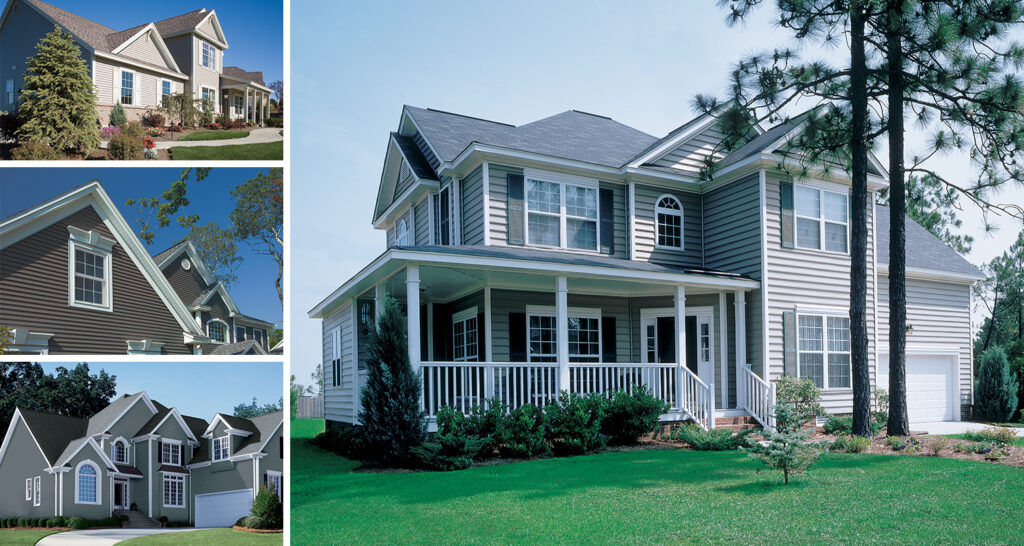
Many vinyl siding conversations begin with color and profile. That makes sense because homeowners care about curb appeal and the exterior must be the one they want.
But for contractors, builders, remodelers, and specifiers, the more important question comes next: Will this product make sense for this house, in this location, under these conditions?
The right recommendation should consider how the siding will work after it is installed. UV exposure, wind conditions, and impact resistance are particularly important.
UV Exposure
Color selection is an aesthetic decision and a weatherability decision. The question is not whether a material will change in response to exposure—all exterior materials do. The better question is how the product controls that change across resin chemistry, pigment package, stabilizer system, surface formulation, manufacturing consistency, and real-world exposure.
In vinyl siding, long-term appearance is closely tied to formulation discipline. UV exposure can lead to surface-level degradation in polymers, while heat is known to accelerate oxidation and thermal stress. The result can be fading, chalking, gloss change, color drift, or uneven weathering, which are further influenced by pigment selection, stabilizer loading, capstock or compound design, color depth, wall orientation, regional solar intensity, ambient temperature, and how consistently the material was manufactured.
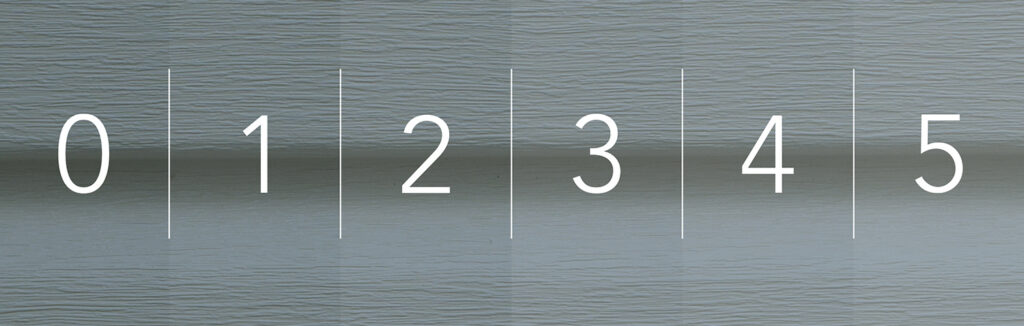
That is why “fade resistant” is not enough. A more helpful comparison is to consider how color change is measured and warranted. Product literature and warranties may use color difference measurements such as Delta E or Hunter units that compare the original color to the exposed color and assign a numerical value to the difference. The lower the number, the less color change will occur.
As a measurable threshold, it gives the conversation more substance than a general promise that the siding is designed to hold its color. It also helps to set expectations with homeowners as a product may meet a warranty standard but still experience some degree of weathering.
Project conditions can raise or lower the stakes. A darker siding color on a south- or west-facing elevation in a high-sun market presents a different risk than a lighter color on a shaded elevation in a moderate climate. Dark colors absorb more solar energy, which can increase heat buildup and make color shift more visible. Large uninterrupted wall areas can also make uneven weathering easier to notice, especially where shade lines, roof overhangs, or adjacent structures create different exposure zones on the same elevation.
For pros, the better questions are:
- How is UV protection incorporated: through the base compound, capstock, coating system, or another surface technology?
- How does the manufacturer define unacceptable fade? Is there a measurable color change standard such as Delta E or Hunter units?
- Does coverage vary by product, color, exposure condition, or region?
- What maintenance does the material require to maintain appearance over time?
- How repeatable is the manufacturing process of the color system?
Wind Conditions
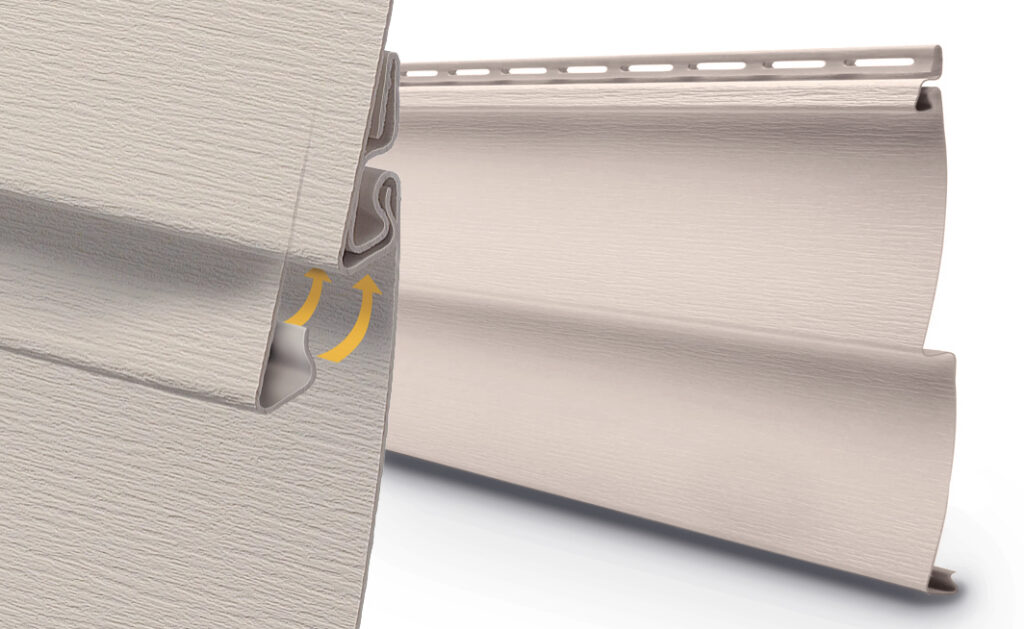
A wind rating is not just a statement about the panel. It reflects a tested or documented condition: the siding profile, lock geometry, nail hem, fastener type, fastener spacing, substrate, and installation method behind the number. Change those variables, and the rating may not apply the same way.
That is why building professionals should be careful with broad claims like “high wind resistance.” A more useful question is: what pressure was the product evaluated to resist, and under what installed conditions?
Wind pressure is commonly expressed in pounds per square foot (psf), representing force over area. A 50 psf design pressure means the assembly is being evaluated against 50 pounds of pressure on every square foot of surface. On a 100-square-foot wall area, that translates to 5,000 pounds of distributed load acting across that area. The load is not carried by one panel or fastener, but that simple equation shows why fastening pattern, substrate, and attachment quality all factor together.
Wind pressure also does not act evenly across a home. Corners, roof edges, gable ends, upper stories, and broad exposed elevations can see higher localized pressures than more protected areas. Site conditions matter too. A home surrounded by other structures and trees may have a different exposure than one near open fields, water, or ridgelines. ASTM D5206, the standard test method for wind load resistance of rigid plastic siding, notes that actual wind loading on building surfaces is complex and varies with direction, time, height above ground, building shape, terrain, and surrounding structures.
For vinyl siding, the fastening detail is especially important because the panel has to remain attached while still allowing normal thermal expansion and contraction. Fasteners that are overdriven, placed outside the center of the nail slot, spaced incorrectly, or installed into an unsuitable substrate can interfere with movement or reduce attachment performance.
In other words, the product may have a documented wind rating, but the field installation must match the conditions that the rating assumes.
Impact Resistance
Impact resistance is not a general toughness claim. It’s a measurable performance attribute defined by how the product was tested, what rating was achieved, and what jobsite or climate condition that rating helps address.
Many impact ratings are expressed in inch-pounds (in.-lbs.), reflecting the amount of impact energy applied during testing. For example, a 60 in.-lb. rating represents 60 inch-pounds of impact energy. In basic terms, that could be created by a 1-pound object dropped 60 inches or a 5-pound object dropped 12 inches, though the actual test method, impactor shape, temperature, and pass/fail criteria are what make the rating meaningful.
Contractors do not need to turn every impact discussion into a lab report. But they do need to connect the number to the exposure. If the home is in a storm-prone region, has siding close to ground level, or includes elevations near active outdoor spaces, impact performance should carry more weight in the recommendation.
A hail-prone market may require closer review of tested impact performance and hail warranty language. A wooded lot may raise more concern about branches and wind-driven debris. Lower wall sections near driveways, patios, walkways, and play areas may face more everyday contact from ladders, tools, lawn and sports equipment, or outdoor furniture.
Important considerations include:
- What test method was used? What impact energy was applied?
- Was the product tested at standard temperature, cold temperature, or both?
- What counted as failure: cracking, puncture, breakage, denting, or visible surface damage?
- Does the rating apply to the exact profile or product line being installed?
- Does the warranty treat hail or impact damage differently?
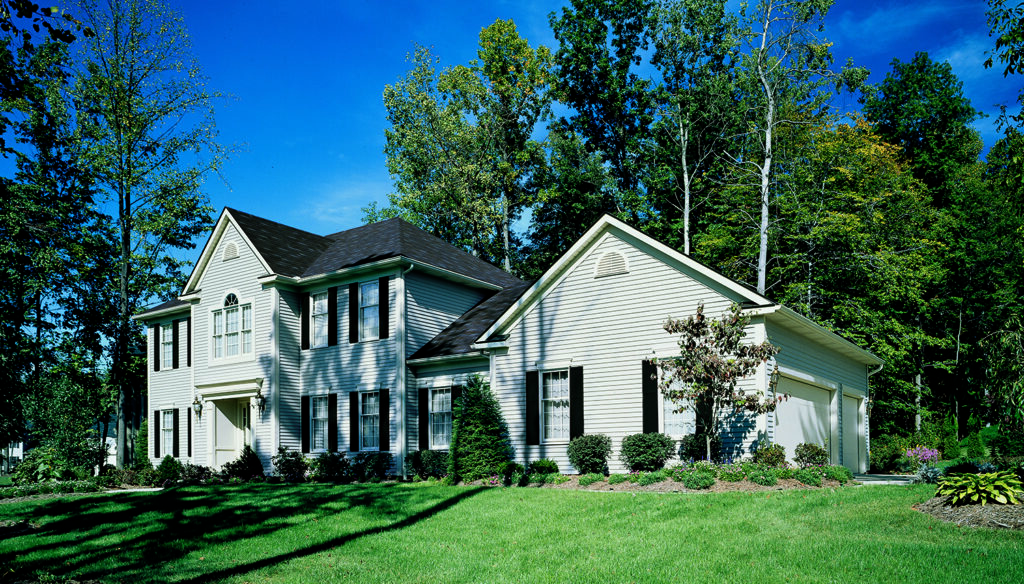
The strongest vinyl siding recommendation is not based on color, profile, or a single performance claim. It’s derived from matching the product to the conditions the home will actually face and then verifying that recommendation with the right documentation. UV exposure should lead to discussion regarding formulation, color retention, and warranty standards. Wind conditions should prompt a review of ratings, fastening requirements, and site exposure. Impact risk should lead to a closer look at tested performance, warranty language, and where the siding will be used on the home.
When those details connect to the project, the conversation can move beyond “which siding looks best?” and toward a more confident answer to the question that matters most: which siding makes the most sense for this home?
Compare our vinyl siding options from Gentek®: